AFIC: Reporting Season In Review
Quick Read
- August was another volatile reporting season, with a wide spread of outcomes for individual shares. After extensive earnings downgrades ahead of results, some of the strongest share price moves reflected relief that results were not worse, rather than upgrades to earnings expectations.
- Dividends remained a positive feature of the season. Ten of the 15 largest ASX companies reporting in August increased dividends, with average growth of 12%. Resources led the way, including a 50% increase in BHP’s dividend on the prior corresponding period (pcp).
- Healthcare was another standout, with CSL and Cochlear showing early signs of improvement following a challenging period. The sector rose 19% over the month, its strongest monthly performance on record.
- Consumer conditions remained mixed. Staples spending proved resilient, supporting market share gains for the major supermarkets, while discretionary spending weakened and mortgage applications declined.
Results from the largest companies on the S&P/ASX 200 Index in August 2026 were increasingly divergent. Dividend growth was encouraging, but the operating backdrop varied markedly by sector and contributed to sharp movements in individual share prices. For AFIC shareholders, the season provided valuable insight into the key themes emerging across the market that are set to shape the year ahead.
AFIC Portfolio Manager Brett McNeill reflects on the key observations from the season and their implications for investors.
Headline growth showed a mixed picture
The S&P/ASX 200 Index finished August only slightly higher, even though headline FY26 earnings growth of 12% was well above the longer-term trend of around 5%. Miners accounted for much of that strength; excluding resources, EPS growth was 5%.
The relatively small number of companies missing expectations needs to be viewed in the context of the substantial downgrades made before reporting season. Forecasts were reduced again during August, with headline FY27 EPS growth now expected to be in the mid-to-high single digits year-on-year.
S&P/ASX 200 Index
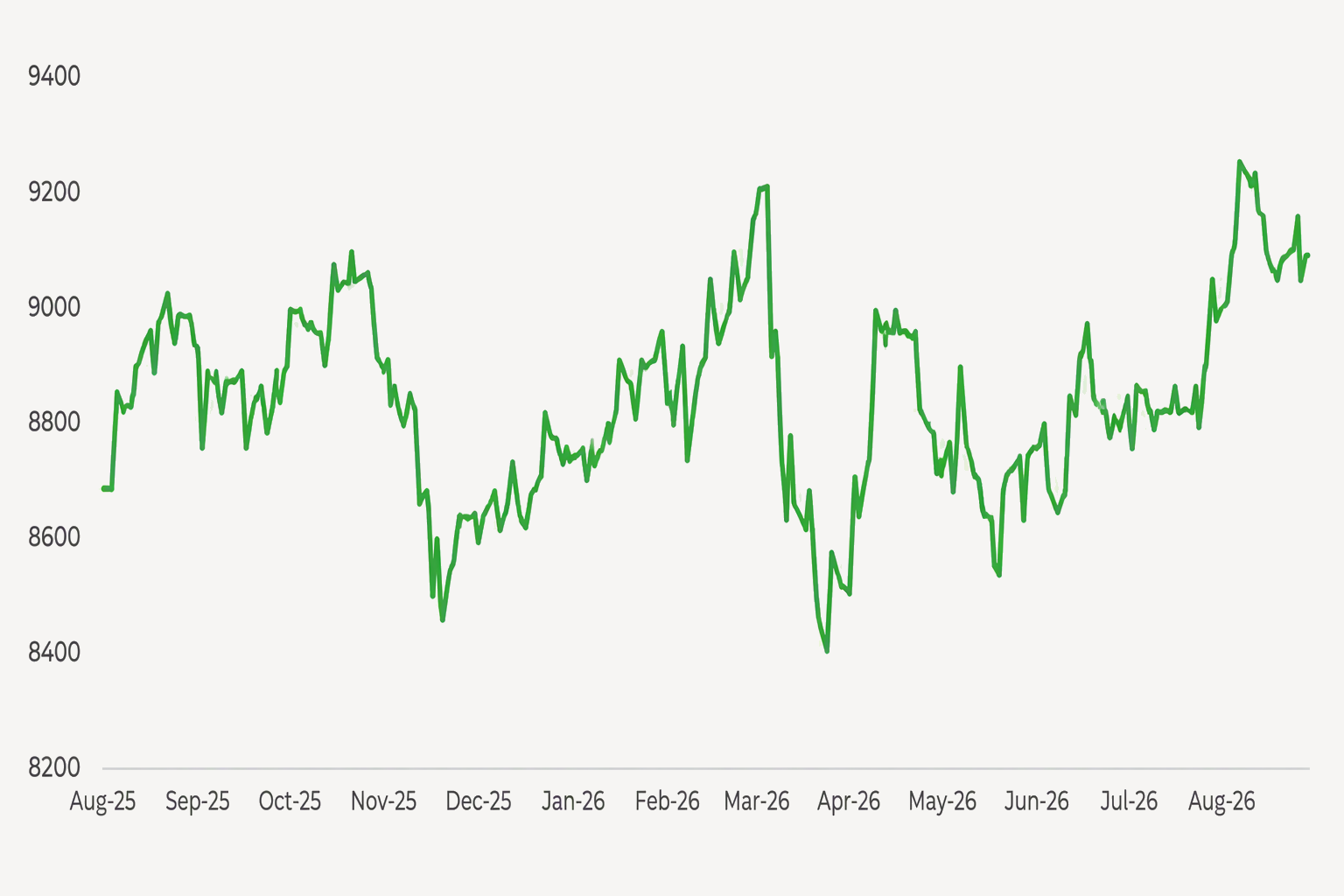
Individual share price reactions remained pronounced, with large one-day moves occurring at a similar rate to recent reporting seasons. Many of the strongest gains came from companies whose shares had already fallen materially during the year, suggesting relief rallies were a bigger driver than genuine earnings upgrades.
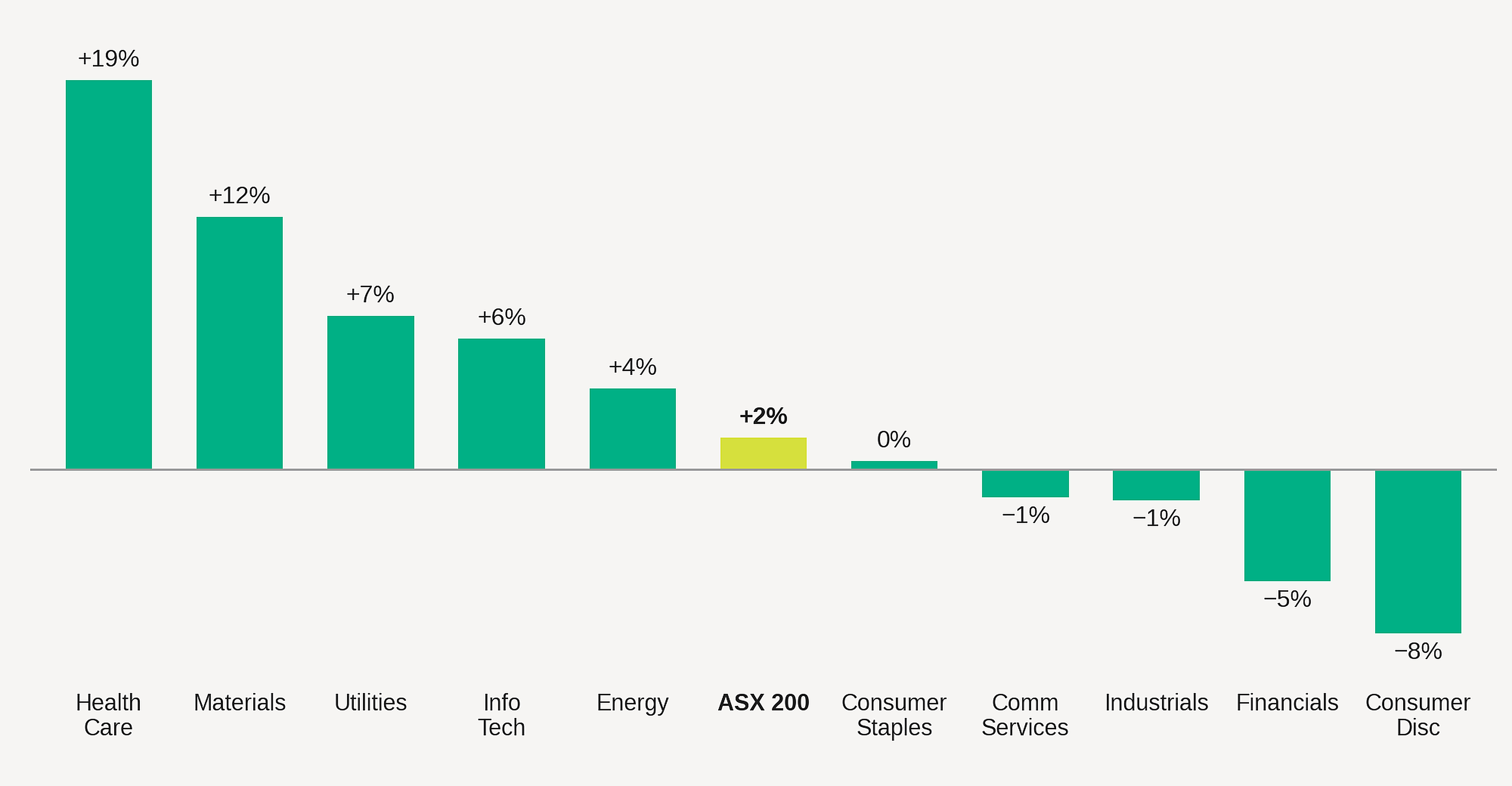
The differences between sectors were equally stark. Healthcare rose 19%, its strongest month on record, while banks declined 7% and consumer discretionary fell 8%.
August 2026: Sector Performance
Dividends remained supportive
Dividend outcomes across the largest ASX companies were generally encouraging. Of the top 15 companies reporting in August 2026, 10 increased their dividends. Average dividend growth was 12%, while the median increase across the group was 6%.
Resources companies delivered some of the strongest increases and were well ahead of expectations in several cases. Evolution Mining lifted its dividend by 62%, BHP by 50% and Rio Tinto by 33%. Fortescue was the notable exception, reducing its final dividend by 23% on the pcp, while Woodside’s dividend was 3% lower.
There was also solid dividend growth among consumer companies, with Coles, Woolworths, Telstra and Wesfarmers all increasing payouts. CSL and Woodside reported lower dividends in Australian dollar terms, although both held or increased their dividends in their reporting currency of US dollars.
August 2026 Results: Top 15 Reporting Companies Dividend Growth
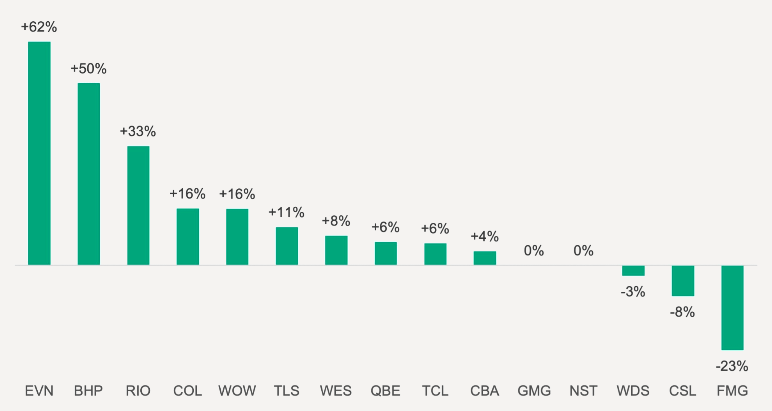
Figure 3: Dividend growth measured as total dividends declared for the six months to June 2026 versus the prior corresponding period. Excludes NAB, Westpac, ANZ, Macquarie and Aristocrat due to different reporting periods.
Takeover activity remained elevated
Corporate activity was another feature of the period, with eight bids for ASX-listed companies over the past two months. The targets included Steadfast, Cleanaway, Reliance Worldwide, Equity Trustees, Perpetual, FleetPartners and OFX, as well as Austal’s US businesses, alongside the completed Genesis-Vault merger.
Financial services accounted for five of the targets, with offshore private capital behind almost all of the approaches. The premiums offered have also been well above the historical norm of 25–30%: 32% for Cleanaway and Reliance, 52% for Steadfast and 108% for OFX.
AFIC holds positions in Cleanaway and Equity Trustees, although both remain relatively small portfolio holdings.
Consumers are becoming more selective
Consumer conditions weakened through the June quarter, with spending shifting away from discretionary categories and towards staples. Although FY26 results were solid, trading updates for FY27 pointed to a softer environment across parts of the retail sector.
JB Hi-Fi illustrated the change in discretionary spending: Australian comparable sales declined 1.4% in July, the first negative result outside the COVID period since 2014, and its share price fell sharply on results day. Management said customers remained highly value-conscious, with more trading down and purchases increasingly concentrated around major promotional periods.
The supermarket majors experienced a different backdrop as households prioritised value and essential purchases. Coles and Woolworths both gained market share and achieved volume-led growth while maintaining margins, leaving them well placed for continued earnings growth in FY27.
Softer conditions were also visible in banking. The sector fell 7% in August, its largest monthly decline since June 2022, as mortgage application volumes continued to fall following recent rate rises and Federal Budget tax changes. Applications appear to have stabilised since then, and the major banks are now forecasting housing system credit growth of around 2.5%–5% in FY27.
Looking Ahead
The Australian sharemarket has remained resilient despite geopolitical tensions, softer consumer demand, and persistent inflation risks. After reaching a record high in early August, the S&P/ASX 200 Index has since lost ground as bond yields have risen and expectations of further rate increases have returned.
Sector performance continues to diverge. Materials has extended the strong run seen in the previous financial year, while healthcare has rebounded strongly as investors returned to quality companies that had been heavily sold down in FY26.
By contrast, rate-sensitive areas including consumer discretionary, REITs and financials have come under pressure as the interest-rate outlook shifted from expected cuts towards possible increases. Bond yields above 5% — their highest level in around 16 years — have also weighed on the valuations of long-duration stocks, particularly technology, alongside broader questions about the pace of AI-related capital expenditure and the returns it will generate.
Against this backgroup, companies are increasingly focused on cost reduction and productivity intiatives to offset inflationary pressure and softer consumer demand.
One encouraging feature of reporting season was stronger-than-expected dividends from several AFIC holdings, particularly in resources.
The market remains moderately expensive on key valuation measures, with the one-year forward P/E ratio above its long-term average and the forward dividend yield below the 10-year Australian Government bond yield.